Wednesday, 30 October 2013

Development of filming

We continued filming on Wednesday 30th October
We used our shooting script throughout filming to ensure we followed our plan. However, when at the location the shot doesn't sometimes work due to the natural lighting or the layout of the location being different than expected. 
The shot below shows us filming: you can tell from this shot natural lighting caused problems. But, these issues could be altered in the editing process.


Friday, 25 October 2013

Development of filming ident

We started filming the ident on Friday 25th October
We recorded footage for our ident 'HW Productions'
The images below show us filming today- 


In these photographs you can see me (Molly Painter) and my peer Lucy Malkin using the equipment- Video recorder and Tripod. You can also see photos of our ident carved into a tree.

Risk assessment

Before we start filming we have had to create a risk assessment to ensure there will be no major dangers when filming our extract. And that both our teachers and parents are aware of the minor risks, and how we plan to deal with them if a problem does occur.

Thursday, 24 October 2013

Ident research (WB)


I have done some research into film ident's to help me see how they suits specific genres and what I need to include in my own ident so it suits a thriller genre. 
The Warner Brothers ident generally suits the entertainment genre. You can tell this by it's use of bright colours creating positive atmosphere. The background image of white fluffy clouds and the upbeat soundtrack also connotes a positive meaning, unlike a horror genre which would build tension.  

The Warner Brothers ident below has been changed to fit a different genre. The background image is still the same with the use of clouds but the change of colour (grey-scale) has created a completely different meaning. Dark clouds create a negative atmosphere automatically 
changing the tone of the extract, building tension and suspense. Also, the music has become much more sincere! 
The ident below was designed to fit 'Batman Begins [2005]', this fits well with their mixed genre including hybrids and sub-genres: Batman is a mix between action-adventure/thriller, crime and drama. 


Warner Brothers have co-productions with Village Roadshow Pictures, they have formed several versions of their idents to suite specific genres of films. 
Some more examples are shown below:


Idents

Below is the link to my 'Prezie' showing the basic information of an ident

Shooting script


Wednesday, 23 October 2013

Shooting script- first draft

We collected feedback from our first draft shooting script:
The comments wrote on sticky notes helped us develop our shooting script further. From the feedback we have made improvements-

  • A column including the shot numbers
  • Details on the scene e.g interior, daytime, bedroom
  • We have removed any mistakes
  • We have added extra shots to connote a stronger meaning
  • Added the name of the film extract 'Attachment' 

Scenes

Breaking sequence into scenes
1. Ident- 'HillsWood Productions' (HW carved into a tree)
2. Titles- Molly Painter, Lucy Malkin, Chelsea Fearn
Date- 12.09.2012
[Situational titles transition into abstract titles- Black screen to mother in bedroom]
3. Scene1- Mother sitting at dressing table un bedroom, putting on make-up, looks up at photograph, shot of jewellery hanger focus on matching pendant necklace.
4. Scene2- child playing in garden, holding worms, digging in soil, brutal interaction with teddy bear, ignoring of blanket and snacks mother laid out.
5. Scene5- child escapes from garden, teddy bear being dragged by string, empty shot, no character to show escape.
6. Titles- name of extract shown via situational titles 'attachment', 'regard' and 'supplement
Date- 11-11-2013
7. Scene4- Strange behaviour of child- child running through field, child hiding behind trees, child 'hunting'

Tuesday, 22 October 2013

List of props (mise en scene)

There are several props we will need to create mise en scene in our thriller opening scene. 
Props:
  • Red lipstick: to show mothers fiery character with a passion for her appearance and shows her desire for her daughter to be the same 'girly girl'. 
  • Love-heart necklaces: the two necklaces- one owned by the mother and one owned by the daughter shows the connection between the two characters, their blood relation is the only thing they have in common.
  • Smashed photo frame of baby: Shows the broken relationship of the mother and daughter. The crack over the baby wearing  a pink dress shows the pretty/innocent stereotype her mother reared her to be, that no longer exists.
  • Dirty teddy and string: shows the child's lack of love and affection, shows her cold uncaring relationship towards people/things. 
  • Bugs/worms: highlight the little girls unusual interests. 
  • Stone, stick, leaves: to emphasizes the nature aspect and the freedom and isolation of the little girl. 
  • Blood/red dye: to create mystery in the extract and show the girls strange situation and environment. 

Costume: 

Red blouse (clean)
Shows mothers smart appearance and feminine, judgmental character.


White dress (later becomes dirty and ripped)     Shows child innocence. As the dress becomes more damaged shows loss of child's purity and the distance between the two characters.
  
Location:

We plan to use a range of locations: with some scenes set in the mothers bedroom to connote security and love, some set in the garden again mimicking the security of a home but with increased freedom. And, the majority of the footage will be recorded in a deserted field showing the isolation of the little girl and the distance in the mother-daughter relationship.


Monday, 21 October 2013

Pitch- feedback

After presenting my pitch, I got feedback from my audience:

It suggested improvements I could make for my final task. 
Someone suggested we should create a clearer understanding of our own narrative. Although we purposely wanted the narrative to be unclear to create mystery, we had not fully decided how much of the narrative we wanted to show in our thriller extract. Since this feedback my group have discussed the narrative and that will be in clear in my next post showing our final idea. The whole story-line wont be clear in our opening sequence: we will use a premonition to move to the future to show the difference in time. However, the premonition will contain lots of close-up's to prevent a order of events forming and allowing a focus on the editing similarly to a title sequence like 'Se7en'.
Another improvement suggested by someone in our audience was to consider what sound we want to include in our extract. In my 'initial thoughts on task' post I stated that sound would be a feature I would find most difficult. Me and my peer will discuss the use of sound to ensure this doesn't result in the downfall of our thriller extract.   


Pitch

We presented our pitch to the class using 'Prezi'. The content of the presentation included the analysis of our basic ideas, we then developed upon these when presenting to our audience.
The link below takes you too our 'Prezi'


Several people in the audience stated our pitch was good due to the discussion of other extracts that helped give us inspiration when creating a idea. However, I think one improvement of our pitch would have been to include more evidence from the audience feedback questionnaires which supported our choices. Also, I think the 'Prezi' made the pitch visually interesting, but we could have included the audience more by asking them questions, this would help us get feedback on points we needed more inspiration on.

Sunday, 20 October 2013

Title sequence- textual analysis of Strange Days

The opening title sequence of Strange Days shows the extract all filmed from one of the criminals perspective. It starts off with situational titles showing four basic pieces of information to which it transitions to a extreme close -up to the characters eye, and then to a Steadicam showing that characters point of view. It helps convey the thoughts, feeling and emotions of the character in the extract to the audience, similarly to Se7en giving an incite into the criminals mind.  
Here is a nine frame analysis of Strange Days title sequence


Follow this link to watch the title sequence {Strange Days (1995) — Art of the Title}

In the title sequence there are several techniques which conform to genre:

  1.  It conforms to genre via the us of disorientation, the use of the Steadicam makes the audience feel confused and lost making it difficult to follow the plot and understand the location. Thrillers often try to confuse the audience to intrigue them so they watch the whole film.
  2. Dialogue is used in the extract to create a atmosphere and help provide information to the audience to build an understanding of the plot. Stereotypically, thrillers have a deep plot with a confused narrative in which the audience are guided to use key pieces of information to piece together and create a understanding.  
  3. Similarly to the other two opening sequences I have analysed- Strange Days has low key lighting with little contrast in colours which hides the identity and surrounding of the characters creating further disarray. The low key lighting represents the protagonists and mimics their hidden identity.
I dislike this as an title sequence the most as it didn't focus much on the titles and the plot was too confusing although the use of a Steadicam was unique to the other title sequences i have seen/analysed. 


Title sequence- textual analysis of Rubicon

I think the title opening sequence of Rubicon is effective in the way it conforms to genre and through analyzing this I can see similarities to tiles like for that of Se7en. The titles are shown via fluid camera movements tracking chalk yellow lines from one piece of data to another. The footage showed bank notes and maps highlighting the theme of crime and fraud suggesting there is quest for something. The extract had a continuous soundtrack with the use of sound effects of a computer/search engine representing the idea of checking for any evidence.    


In the title sequence there are several techniques which conform to the thriller genre: Again, the techniques are very similar to seven 
  1. The use of a black and white theme in the thriller titles extract is a stereotypical technique used in thriller genres, it represents the ideas of antagonist and victims as the two contrasting colours are often worn to portray meaning about that character type. Antagonists are dressed in black to suggest mystery/secrecy and death, whereas victims (possibly of crime in Rubicon) are dressed in white to connote innocence/purity and vulnerability. The use of these colours foreshadows the confused plot often shown in thriller genres.
  2. The use of the continuous movement from each piece of information (in Rubicon) creates disorientation in the audience. Thrillers often have a confused narrative with use of flashbacks and premonitions to create disarray of both the plot and audience. The title sequence sometimes mimics this via the use of camera movements and camera angles- an example of this is Chasseurs De Dragon which I briefly analysed previously.   
  3. Close-ups and extreme close-ups are genre specific as they don't emphasize the general idea of a thriller plot but focus on the micro elements creating confusion about the plot. Not only does Rubicon use the camera shots with focusing on data (number and letters) but so does Se7en via integrated shots with fast pace editing to create tension and make the audience feel disorientated.
I like this as a title sequence as I think its an interesting way of showing the titles and it indicated a clear suggestion of the plot for the rest of the film.

Title sequence- textual analysis of Se7en

The title opening sequence consists of several overlapping shots portraying the removal of identity/evidence in the 'Se7en' extract. Repeated, sketchy shots are shown with the removal of a fingerprint and extraction of information from old documents. The extract uses saturated colours to create a sinister mood in the opening, this mood is also created by the repetitive sequence including occasional use of harrowing high pitch voice. Theses techniques used in the Se7en opening sequence gives us an incite to the world/mind of a serial killer.


In the title sequence there are several techniques which conform to the thriller genre:
  1. The use of saturated colours fits with the stereotypical thriller genre creating a menacing tone and foreshadowing the bitter plot of the extract. In Se7en's titles sequence the lack of colour could emphasize the life drained from the murders victims. 
  2. Us of gore is genre specific, Se7en uses several close-up shots showing the peeling of finger prints and brutal images (e.g. of the item lodged in a mans head). Thrillers often use gore/violence in their extract as it creates anxiety and terror in the audience. 
  3. The increasing pace of the soundtrack and sound effects suits the genre as it helps build tension and mystery. Thriller genres aim to create suspense and cause the audience to ask questions, the use of sound helps do this!

Saturday, 19 October 2013

Opening sequence- textual analysis of The Prestige

As part of my genre research, I had to textually analyse three opening sequences to help me create a clear idea of what conforms to thriller genres. The analysis of the openings will make me more knowledgeable on what techniques are used in thrillers and how this creates an effect upon the audience. 
This research will help me and my group when creating the pitch for our own thriller opening sequence.

The Prestige
The thriller genre created a tense, bitter tone portraying the plot- competition between two magician brothers. Also, the use of cross-cutting creates a sense of mystery emphasising the confusion between the relationship/competition of the magicians and with a deeper meaning highlighting the confusion of magic. Unusually, The Prestige has no use of an ident but does have the opening titles. The titles used in the extract changed from situational to abstract with the use of the footage in the extract. This is a technique we may decide to use in our own thriller extract as I think it helps integrate the meaning of the titles and the extract together. Another idea I have started to like that was used in Limitless is the use of a voiceover. In this extract it was shown via the voice of the wise old man telling a story about the competition between the two brothers and their increasingly dangerous shows involving the secret of magic. The voiceover establishes one of the main characters and the content of his dialogue helps the audience identify the other characters and understand the plot with the two magicians both who are (similarly to Limitless) not clearly represented as the protagonist or antagonist.  In the plot there is a mixed narrative between the two locations of the old man talking and the magician shows. This creates confusion and imitates the illusion of magic. Some of Todorov's structure is used: the use of the disequilibrium as the tension increases between the two competitors and recognition of disruption when the magic tricks goes disastrously wrong! Media language is used in the extract to connote meaning, the use of low key lighting represents the secrecy and the obscure nature of magic. 

Opening sequence- textual analysis of Limitless

As part of my genre research, I had to textually analyse three opening sequences to help me create a clear idea of what conforms to thriller genres. The analysis of the openings will make me more knowledgeable on what techniques are used in thrillers and how this creates an effect upon the audience. 
This research will help me and my group when creating the pitch for our own thriller opening sequence.

Limitless
This opening scene created mystery throughout the sequence causing the audience to ask questions. (Why is he standing on the edge of the building? Who is at the door?) The opening made you ask lots of questions about the main character and intrigued the viewers to watch more. The male character was neither clearly represented as an protagonist or antagonist creating confusion and mystery about his role in the thriller. The use of the voiceover told us the most information about the character giving an insight into his thoughts and feelings, helping the audience retrieve information about the extract. When looking at media language for my extract I may consider using sound such as a voiceover as I think it is effective in showing the characters emotion and more interesting than dialogue which is most commonly used. The location in the extract was shown to be a busy/hectic but the use of ariel shots and establishing shots from the top of the building helped create a feeling of isolation and made the character look lonely even though the city was not deserted. The indent used in the extract were shown on a black screen then followed by abstract titles. The dramatic titles appeared over the footage of the city with sound that matches the title. The titles were one of the strongest points in the opening of the Limitless extract with the smooth transition from one car window to the next along a line of traffic in the city. Also, the narrative starts off at the peak, this is a conventional technique often used in  thriller genres. By starting at the peak in the opening sequence the audiences attention is grabbed straight away and intrigues them to watch more, thus serving the purpose of a opening sequence! 

Opening sequence- textual analysis of Flightplan

As part of my genre research, I had to textually analyse three opening sequences to help me create a clear idea of what conforms to thriller genres. The analysis of the openings will make me more knowledgeable on what techniques are used in thrillers and how this creates an effect upon the audience. 
This research will help me and my group when creating the pitch for our own thriller opening sequence.

Flightplan
The genre has a solemn tone and creates confusion in the narrative via the use of flashbacks. In addition, a foreign language is used to create even further mystery and confusion in the audience. But, some English was used to intrigue the audience. The dialogue "...trauma to your husbands head at the fall" answered some of the questions produced by the opening scene but it also resulted in even more! It created a feeling of danger, sadness and enigma, captivating the audience. The main character was shown in both past and present time, the portrayal of the two different time scales was shown via the use of media language. Stereotypical representations were used via the portrayal of an innocent woman and vulnerable child due to the collapse of their family unit with the loss of the male protective figure. Also, the representations of the male antagonists dressed in black connotes danger and conforms to convention showing the threat they produce to the bereaved family. The lighting and sound were slightly different in the two situations to show the difference between the two narratives. For example hyper-real sound was used when the raindrops fell from the umbrella, this emphasized what is present and actually happening not a flashback from the past. However, there was only subtle differences, to ensure the audience remained confused and couldn't distinguish the difference in time. Small details such as the time on the clock '3:05' created even further illusion and mystery as the train station was extremely empty for 3.am, yet it would be unusual for the characters to be at the train station at 3.pm, again this highlights the audiences uncertainty of the plot. Flightplan showed the use of the films ident 'Touchstone Pictures', then followed by abstract titles which had footage of a train rushing past behind the titles, this created disorientation.
There were several other techniques I thought were interesting such as the conventional use of black and white contrasting colours and the use of the stairs. The negativity of the mans death contrasted with the child bedroom. One technique which highlighted this contrast was the use of the visual bridge, plane shadows were shown moving over the court yard and then into the child's room from the night light. Me and my group member may decide to use a visual or audio bridge in our extract as we thought it was extremely effective. 


Thursday, 17 October 2013

Ideas- for my personal title sequence

I did a small recording of myself stating what I need to include in my groups title sequence.

Summary- title sequence article

Iv done a brief summary of the article: 'The Inner Workings'

Its states- There are a range of different title sequences however they all are slightly similar and follow stereotypical conventions depending on the genre they are designed for, although many are no longer genre specific and this is becoming popular! Some titles would have heavy use of animation, where as others focus on a montage of overlapping imagery. There is use of situational titles over blank screens or abstract titles with the use of footage in the background. A title sequence has a short format and is often creative, no clear narrative is needed as the opening is meant to leave the audience asking questions. Because of this titles can form abstract worlds can be explored and elaborated.

There writer of the article had several favorites of which are 'creative and had superior execution':

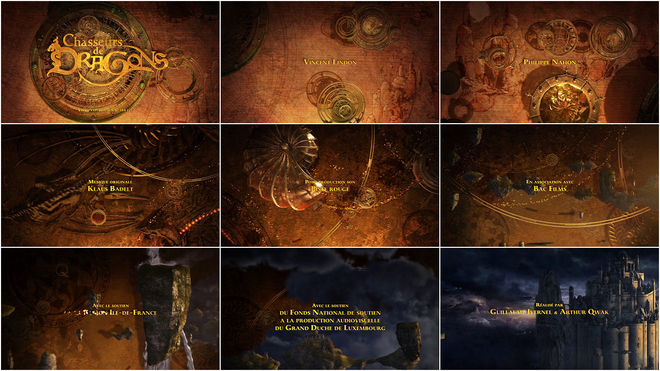
Chasseurs De Dragon: The title sequence starts off at the films location then switches to- intricate animations of clockwork, skeletons, clouds and castles during a continuous camera movement with a smooth transition from a side on view to an aerial view, with the use of warm lighting– and fades back to the original location.
Chasseurs De Dragons

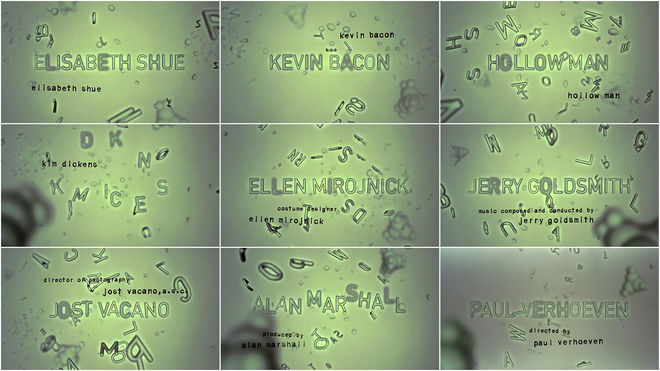
The Hollow Man: It starts off with situational titles which then fades into abstract titles and the flowing movement of molecules and swirling letters. The whirls of letters transition into sketchy names for the titles with cold lighting and pale colours all within a single camera shot.
Hollow Man

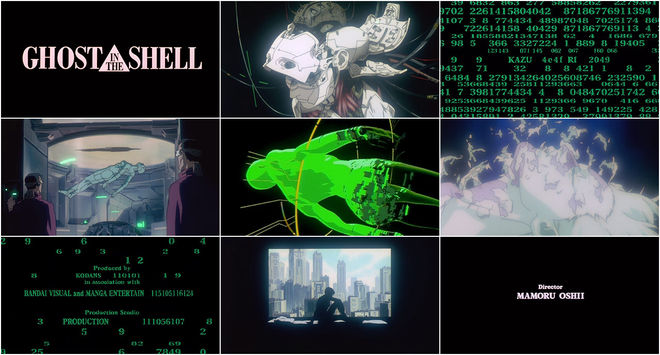
Ghost in the shell: The titles show a sequence of animated drawings during the creation of a female body. In between the drawings, situational titles are shown with the image of a processing computer screen forming into the titles/credits which are asynchronous with the sound of a typewriter. Throughout the opening there is a soundtrack of women singing in Japanese whilst the human is created, the figure then becomes alive- almost waking from a dream.
Ghost in the Shell
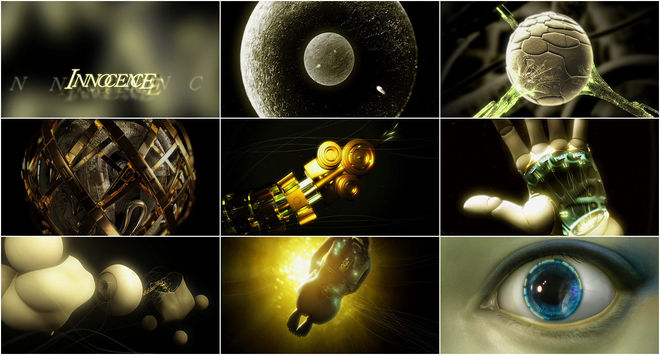
Ghost in the shell 2: This has a similar opening with the creation of two human figures with a similar soundtrack of Japanese singing.
Ghost in the Shell 2: Innocence

Tuesday, 15 October 2013

Analysis of survey + questionnaire

  • Our online survey had an equal audience with half of the survey completed by males and half by females (and the paper questionnaire was very similar). 
  • Unfortunately the majority of our audience were completed by the age group 15-18, this is a disadvantage as we wanted a even representation of age so our results were not biased. 
  • The the questionnaire and survey suggested overall the people in our survey preferred abstract titles to situational titles but only by 8% in the survey, because the preference is very small we will make our own decision on which to use during the title sequence or titles integrated with the opening. One idea could be to use both types of titles, so we can target both audiences. 
  • Similarly to the previous question there were two answers with a similar percentage: with 38% preferring the equilibrium and 31% preferring the recognition of disruption. Again the paper questionnaire supported the survey showing the disequilibrium is preferred. Because these two were the leading preference we could use both narratives via the use of a flashback or predestination, this would make the thriller more interesting and would allow us to include different techniques to portray different meaning for the different time scales.
  •  Again, there was a joint favourite with both action and psychological thrillers coming second. However, this result seems unusual as more people in the survey stated they liked to see violence/gore in the thriller extract yet only 8% said they preferred a sub-genre of a horror thriller. This question didn't have a clear favourite as crime and psychological sub-genres were most popular on the paper questionnaire. Nonetheless, a psychological thriller was the most popular overall, this was shown by the two formats of the audience research
  • The 6th question in the online survey and paper questionnaire showed our audience did not like to find out too much information from the opening sequence showing they liked mystery and questions a opening thriller sequence creates. 
  • The chart revealed, the majority of the audience from survey monkey preferred the protagonist to be male, antagonist to be female and all the answers suggested they liked to see a female victim- conforming to stereotypes.
  • In general all the information showed most people would like a thriller set in a traditional location 38% online and 3/5 on paper, but this was followed closely by (31% or 2/5) for a urban location and the same percent for no preference. This could possibly be a downfall to our survey suggesting we should have offered more options or allowed for a specific location to be noted on the survey. 
  • Finally, as stated before the majority of people like to see violence and gore in the thriller extract however it was very close with only 8% preferring the use of it opposed to non. Again this was supported by the paper format questionnaire with 3/5 preferring gore and 2/5 preferring non. The decision to use or not use violence/gore depends whether it fits our chosen target audience.


Monday, 7 October 2013

Survey Monkey

This is a link {http://www.surveymonkey.com/s/8HGFPXSto our questionnaire we produced on survey monkey- which will help us find out more information about thriller genres. We printed some paper versions and  also put a survey on the internet to help get a varied audience

Sunday, 6 October 2013

Thriller conventions

Generic conventions of thriller genre:
what they should do/contain:
  • They keep the audience alert
  • Contain a strong plot (mission, escape, mystery, etc) & sudden plot twists
  • Often have antagonists and protagonists
  • keep the audience unsure of what will happen next
  • Generally action packed
  • Contain literature techniques such as cliffhangers
  • have a specific narrative- they often follow Todorov's theory of structure:
1. equilibrium
2. disruption of equilibrium (disequilibrium)
3. recognition of disruption 
4. attempt to repair  
5. & return to equilibrium 

Genre research

I have presented by genre research on the visually interesting presentation site 'Prezi' here is the link to my presentation:

Saturday, 5 October 2013

Group work- roles + responsibilities

There are just two members in my group myself and Lucy Malkin [which the video shows]
We have a small discussion in the video showing us as a group:

We wont take on separate roles and responsibilities due to us being a small group and wanting to make sure the work is complete efficiently and effectively but with each others input-
Unlike in the preliminary task where I did the majority of the filming we will both record the footage and get others to act for us, this way we both can decide whether we like a shot or camera movement, etc.
We will take an even responsibility in the possession of the equipment encase of any damage. 
And finally, we will both edit as this is a technique we both need to develop! 

Friday, 4 October 2013

Initial thoughts on task

Personally I think thriller genre is a difficult task as they often have deep/adventurous plots which will be difficult to create. Fortunately, it is the opening scene of a thriller meaning a clear plot does not need to be produced, just clear conventions of meaning which fit together. Lots of short takes and transitions would make an effective opening as long as it is tastefully created with good use of effects and editing.

Research & planning
I have numbered Level 4 to show which techniques I find the most difficult [1] and which I find the least [6]. 

Personally, I find time management the most difficult as you have a lot of work to reach within a small period of time that must be complete for specific deadlines. The point I find easiest to fulfill is to have excellent presentation of the (research and planning) work, as I enjoy presenting my work well. However, this relates to time management which I struggle with, this is because to provide the high quality of presentation plenty of time is needed! 

Product
I have done the same for the Level 4 marking scheme on the product. Rating them from: 1 being most difficult-5 being least difficult.


I think that using sound appropriate for the task is the most difficult [I stated this in my evaluation of my preliminary task]. I find sound difficult as not only does it have to fit the extract, it has to be edited to fit in with the visual images, it has to create meaning and most of all must not be copyright protected. 
The point I find easiest is making the product fit the genre and task, unlike some people/groups (in my class) I don't get too focused on including action and weapons and can easily focus on fitting the material to my target audience. I find it quite simple to distinguish what is and is not appropriate for the task. 


Thursday, 3 October 2013

Main task

After completing my preliminary task on my previous blog, I have developed new skills and become more prepared for my main task.
On Monday 30th I was given my main task: 
For this I will have to create an opening sequence for a thriller which can include a hybrid or sub-genre. Before I produce the thriller extract I will have to plan and organize my work thoroughly and focus on time management to ensure I reach deadlines. My first stage of planning will include: extensive research into thriller genres.